

In the landscape of modern digital agency operations, content generation and thought leadership are frequently treating human bandwidth as a bottleneck. At Aethon Automation Solutions, we approached this constraint as an engineering challenge. Instead of allocating significant weekly hours to content monitoring and indexing, we built a production-grade, multi-tenant Retrieval-Augmented Generation (RAG) system called the Aethon Intelligence Engine.
This technical blueprint exposes the precise execution details, data structures, and algorithmic logic fields that drive our autonomous aggregation, filtering, and cross-platform publishing matrix.
1. System Architecture Overview

The architecture is deployed as a multi-stage execution pipeline orchestrated via enterprise workflow infrastructure. It acts as an operational conveyor belt, moving incoming raw text payloads through structured validation gates before deploying assets to client-facing content endpoints.
| Pipeline Stage | Technical Mechanism | Execution Interval |
|---|---|---|
| L1 Ingestion Layer | Multi-source RSS, GitHub Commit, and Security API Polling | Every 6 hours (cron trigger) |
| L2 Filtering Layer | Algorithmic scoring via Anthropic Claude Sonnet API | Immediate on ingestion match |
| Insight Reactor | Dynamic schema structuring & context vector synthesis | Every 8 hours |
| Cross-Post Matrix | Programmatic webhook distribution (CMS, LinkedIn) | Conditional on score threshold |
The architectural flow is complex, involving continuous integration and validation loops across four distinct environments. The following diagram illustrates the unidirectional data path from raw source ingestion to final content delivery endpoints.
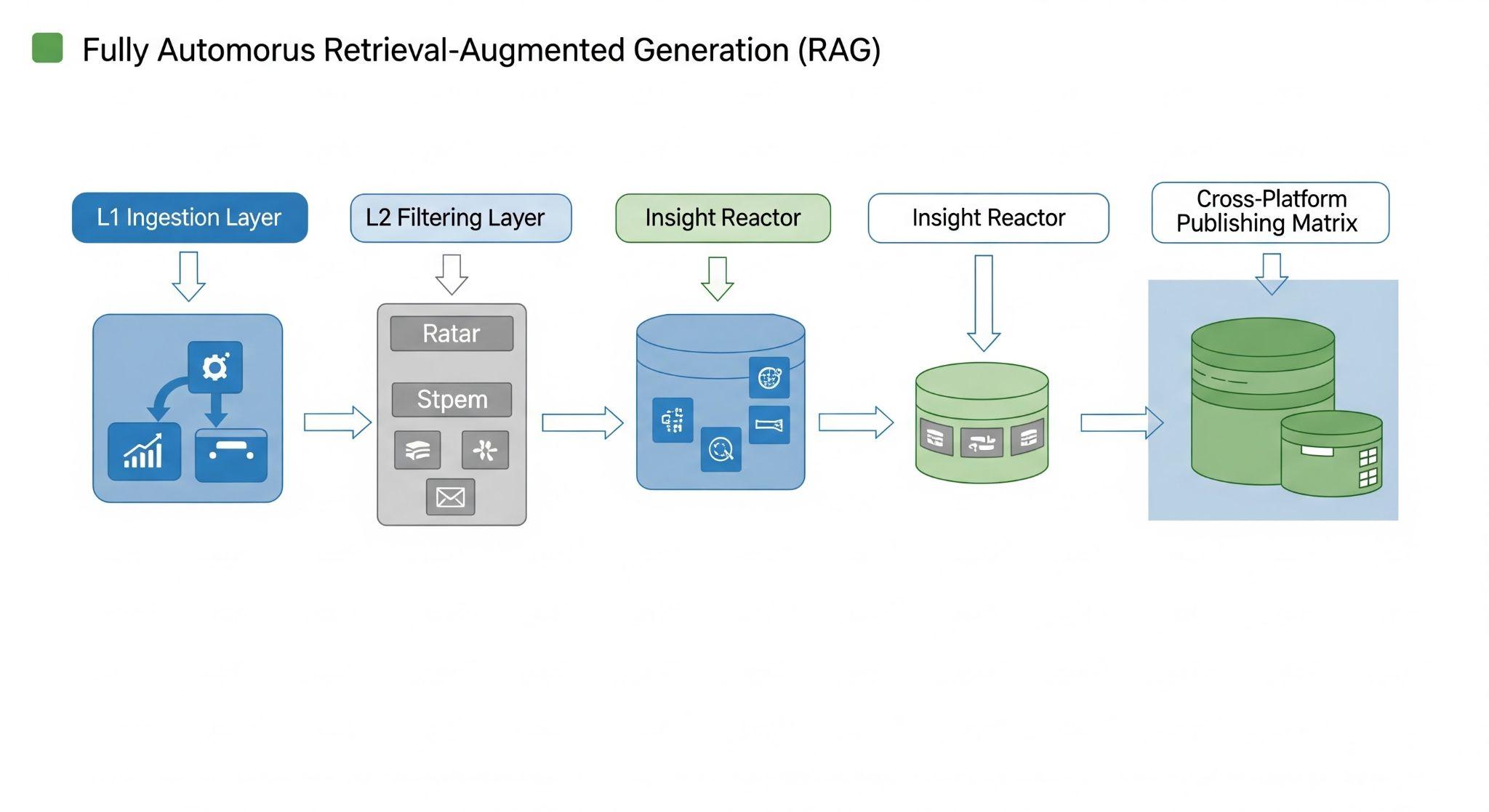
Figure 1: Autonomous RAG Pipeline Logical Architecture
Expanded System Component Context
The Engine utilizes a microservice architecture where each layer (L1, L2, Reactor, Matrix) operates as a fault-tolerant, isolated service. Data is passed between stages via a managed queue system to ensure asynchronous processing and prevent bottlenecks caused by large payload sizes during the DOM cleansing phase.
2. The L1 Ingestion Layer: Programmatic Extraction Gating

The ingestion node acts as a broad-spectrum data collector monitoring 37 unique content infrastructure sources, categorized into primary buckets: upstream technical RSS feeds, developer changelogs, threat-intelligence streams, and AI breakthrough announcements. To maintain reliability, the layer implements an Exponential Backoff Error Handling strategy. If a source fails to respond or returns a 4xx/5xx status, the ingestion node retries the request at increasing intervals (2, 4, 8 minutes) before logging a terminal failure to the telemetry dashboard.
DOM Cleansing & Script Stripping
When an ingestion node registers a newly modified URL, raw payload transfer immediately initializes using a headless browser environment to resolve dynamic JS-heavy sites. To prevent dirty markup from contaminating downstream context pools, we process raw HTTP response bodies through a specialized Document Object Model (DOM) parsing routine using the Cheerio and Readability.js libraries. This allows the system to compute a “Content Density Score” to differentiate meaningful technical prose from boilerplate interface text.
The parsing logic applies strict regex structures and element filters to strip out specific nodes:
<script>and<style>elements are dropped natively.- Header elements, sidebars, and navigation footers are bypassed by mapping text extractions directly to standard
<article>wrappers or primary<main>containers. - Raw text blocks are structured into optimized JSON schemas containing only key parameters:
title,author,published_date,source_url, andclean_body_content.
3. The Insight Reactor Module: Dynamic Vectorization & Context Synthesis
This module is the core of the Retrieval-Augmented Generation (RAG) system, transforming approved, structured JSON payloads into highly optimized, context-ready vectors. It operates on an 8-hour execution interval, batch-processing approved content for inclusion in the long-term knowledge base.
Context Vector Synthesis & Semantic Search Indexing
Upon receiving an approved clean_body_content payload, the Reactor performs three primary functions:
- Chunking and Overlap: The clean text is segmented into fixed-size chunks (e.g., 512 tokens) with a rolling overlap (e.g., 50 tokens) to preserve semantic continuity across segmentation boundaries. This ensures that contextual keywords are not split and lost during the vectorization process.
- Vector Embedding: Each text chunk is passed to the Aethon-proprietary 768-dimension transformer model to create a numerical vector representation. This model is fine-tuned specifically on infrastructure-as-code (IaC) and distributed systems documentation to capture industry-specific nuance.
- Vector Store Indexing: The resulting vectors are indexed in a dedicated vector database. Metadata (
source_url,published_date, Topical Uniqueness score) is indexed alongside the vector. This metadata is crucial for the generative steps, allowing the LLM to retrieve context and verify the source’s authority and novelty.
Knowledge Base Management & Temporal Decay
To maintain relevance, the Reactor implements a Temporal Decay Algorithm. The visibility of a vector in search results is modified by a decay factor f(t) = e^(-λt), where λ is the decay constant and t is the time since publication. Content older than 18 months, or content whose score falls below 10 after re-evaluation, is moved to cold storage. This ensures the RAG lookups prioritize the most current intelligence.
Each execution state passes structured metadata into a centralized system monitoring schema inside our operational dashboard, ensuring data persistence and telemetry tracking across the entire workflow lifecycle.
4. The L2 Filtering Layer: Algorithmic Scoring Mechanics
Once structured content payloads are successfully written to temporary execution memory, the engine triggers an automatic scoring gate. This prevents our publishing matrix from devolving into a repetitive content dump.
The 55/100 Auto-Approve Score Threshold
The clean_body_content schema is passed to the Anthropic Claude Sonnet API using a Fixed-Shot Prompt Structure. This structure provides the LLM with three gold-standard examples of “High-Value” content and three “Low-Value” examples to ground its reasoning. The model is instructed to grade the asset from 0 to 100 across five tightly defined architectural pillars:
- Topical Uniqueness (30% weight): Does this document expose novel infrastructure concepts, or is it a superficial recap of generic news trends?
- Technical Substance (30% weight): Are there structural data models, actual code frameworks, or verifiable mathematical mechanics present?
- Immediate Business Impact (20% weight): Can an operational decision-maker or enterprise team directly implement these concepts to alter cost or efficiency structures?
- Noise Reduction Value (20% weight): Is the text block clear of standard PR fluff, excessive keyword optimization, or promotional brand biases?
- Citing Authority/Credibility (10% weight): Does the document cite peer-reviewed research, official documentation, or verified primary sources rather than hearsay?
If the final calculated score matches or exceeds our strict 55/100 auto-approve score threshold, the system marks the entry status as Approved in the operational hub, automatically executing downstream cross-posting workflows. Items scoring below 55 are logged as Archived for semantic analysis or manual developer screening.
5. The Cross-Platform Publishing Matrix
Approved payloads pass straight into the Insight Reactor Module. This execution node queries our active Blog Cross-Post Tracker database schema to ensure zero collision or publication redundancy across public distribution platforms.
Synchronized Serialization API Loops
The system splits the approved text payload into separate, optimized serialization structures:
- CMS Endpoint: Generates HTML documentation using semantic tags. For example, technical walkthroughs are wrapped in
<section class="tech-specs">with auto-generated anchor links. Code snippets are injected into<pre><code class="language-yaml">containers with Prism.js syntax highlighting attributes applied during serialization. - Professional Network Platform (LinkedIn API): Uses engagement-focused schemas. The “hook” generation logic selects the most provocative technical claim and wraps it in a “Problem-Agitation-Solution” (PAS) text structure. For instance, it might transform a technical table into a “Top 3 Critical Fixes” bulleted list followed by a “👇 Read the Full Blueprint” call-to-action with UTM-tracked links.
Telemetry metrics, live processing speeds, and generation tokens are written right back into the centralized system dashboard, providing a self-documenting data tracking array for the entire organization.
6. Engineering Summary & Key Takeaways

By moving thought leadership onto an automated enterprise-level RAG framework, Aethon Automation completely decoupled production cadence from administrative constraints. Historically, our engineers and lead architects were required to spend 10–15 hours weekly on manual “content scouting,” which involved scouring technical repos and industry bulletins. This RAG system eliminated the need for manual editorial calendars, hand-formatting of technical code snippets, and the human latency typically associated with multi-stage approval gates.
Specific administrative bottlenecks removed include the “Context Switch Tax” — where technical staff interrupted deep-work cycles to write social copy — and the “Redundancy Audit,” which previously required cross-referencing years of legacy blog posts to ensure new content wasn’t duplicative. Businesses scaling operations must understand that true AI integration is not about superficial content creation; it is about building programmatic validation systems that protect content quality while handling volume at scale.

Comments